

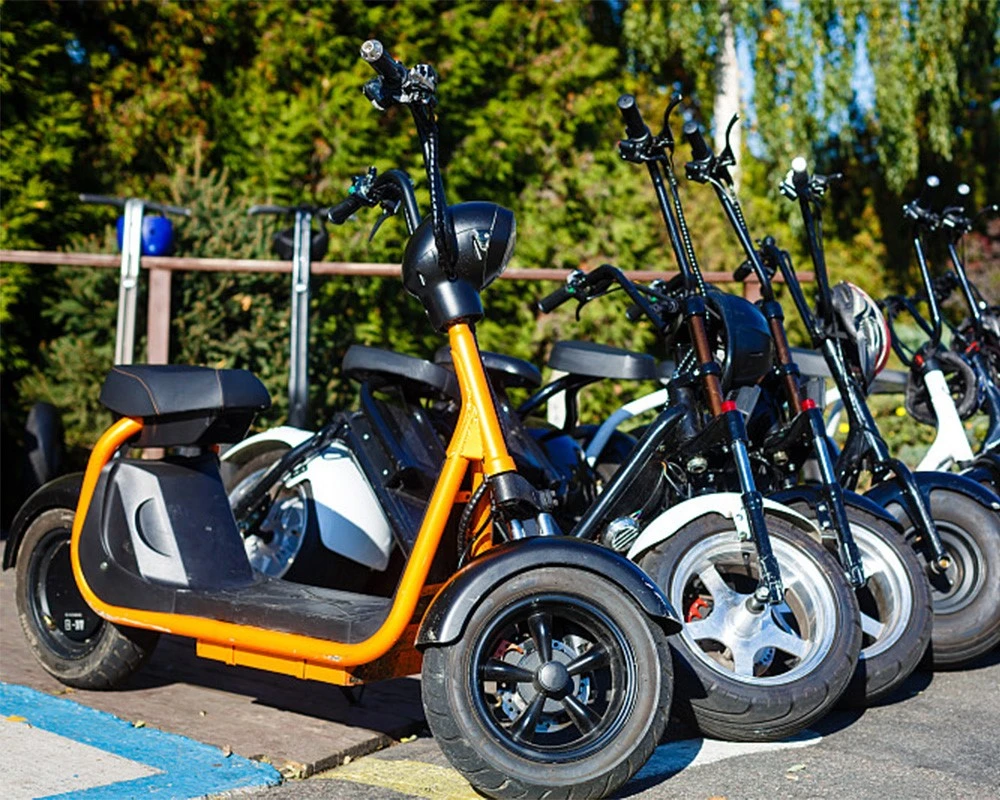
Two prices crossed in the same quarter, heading in opposite directions. In the first three months of 2026 an exported electric motorcycle averaged around USD 770, up 8% to 10% on a year earlier, while a petrol machine sat near USD 650, gaining 3% to 5%. Ten years ago the relationship ran the other way, and the whole argument for the battery version was that it cost less than a combustion machine of the same displacement. That argument is gone, and nothing has quietly taken its place.
The higher price has a cause, and the cause is not margin. Of every hundred motorcycles sold worldwide, roughly ninety-eight sit below 10 kW - precisely the band where an electric drivetrain is mechanically cheapest: no gearbox to machine, no clutch plates to replace, no ignition or exhaust hardware to certify, far fewer service items over a vehicle's life. What cannot be removed is the pack, bought as a complete unit and priced off cell markets, which makes it the hardest line in the bill of materials to compress; that is why one platform is cut into price steps by kilowatt-hour rather than by engineering. On top of that sit type testing, certification and conformity checks, a layer a petrol commuter never carried. The gap comes from design, not from a decision about margin.
The category turns over roughly USD 40 billion a year, equal to 14% of new vehicle registrations worldwide and growing near 12%, and on this report's reading very little of that sits in European showrooms. It sits in Asian and Latin American commuter traffic. A performance launch in Munich and a commuter launch in Jakarta can share a nameplate and share almost nothing else.
Move an electric motorcycle's sticker from 650 to 770 before freight, duty or plates, and the buyer changes species. At 650 this is cash against a used Japanese scooter. At 770 it becomes capital expenditure, and capital expenditure belongs to whoever can spread the difference over daily earnings. That one hinge explains more of the last two years than any single new electric motorcycle.
Africa took the first route by declining to retail at all. Spiro has placed more than 80,000 vehicles across over 2,500 swap points and passed 30 million exchanges; Ampersand runs above 6,000 vehicles on 8,000-plus packs and turns more than 20,000 swaps in a day. Neither is really selling metal; both sell a rider's daily cost - the hardware opens the account, the network behind it collects. In markets like these, swap density, not showroom size, is what holds pricing power.
Latin America turned the same arithmetic into operating revenue, and Brazil is the market that matters most. Brazilian motorcycle registrations are forecast at 2.35 million for 2026, up 6.9%, on production near 2.1 million; July alone rolled out 190,794 units, up 36%, and the Northeast accounts for a third of national sales. The electric side is moving faster, with January-to-April sales up 33.9% on the year. The region's electric mototaxi segment should reach USD 86.13 million by 2030 from USD 21.8 million in 2025, compounding above 30%. An electric motorcycle working two or three shifts repays its premium out of fares within months; the same unit parked outside a house for twenty hours never repays it at all.
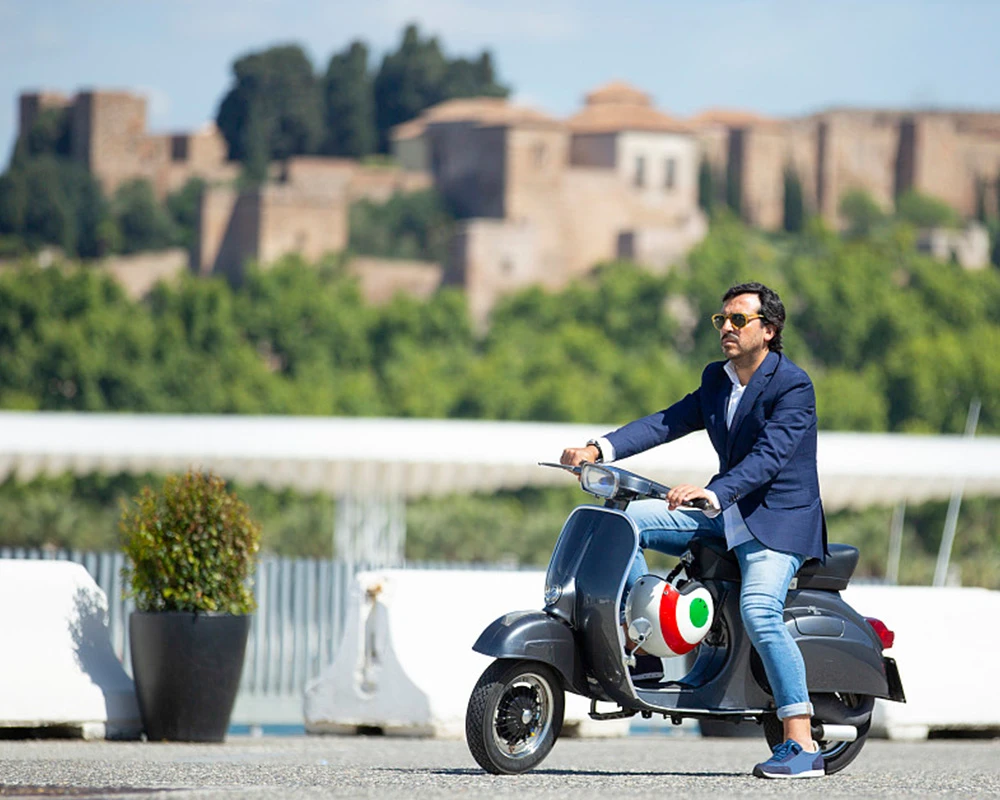
Brazil has also added a variable the rest of the continent will end up copying: it moved light electric two-wheelers into the vehicle registry. From 1 January 2026, a machine of up to 4 kW and 50 km/h must be registered, plated and licensed annually, ridden on an ACC or a category A licence, with units already sold given until the end of 2025 to comply. For a seller this matters more than any subsidy. A low-speed unit that once went to a buyer holding no licence now sits in the same registry as a motorcycle, so the first question at the counter becomes whether it can be plated at all and whether the papers travel with it. A supplier that lands the certificate of conformity, the invoice and the conformity file before the container berths has saved the buyer a trip to the registry office and a batch of stock that cannot be returned.
China shows substitution rather than enthusiasm. New electric motorcycle registrations had passed three million by the end of June 2026, roughly 46% higher than twelve months earlier, and the usual explanation is administrative: a revised national standard tightened speed, mass and anti-modification rules for electric bicycles, so riders who had been buying an over-spec bicycle lost that option and moved to the nearest legal product that still travels at a normal pace. Exports that quarter reached 3.31 million units; the value was USD 2.55 billion, with 58.9% bound for Asia: the Philippines and Vietnam at roughly 182,000 and 157,000, Thailand at 121,000, and some 350,000 spread across Indonesia, Malaysia and Bangladesh.
What comes next is paperwork, not subsidy. Two Vietnamese technical regulations took effect on 9 and 10 October 2026 and turned motor and pack into declared articles subject to re-measurement: declared rated speed, rated power and peak power must land within a 5% band of what is measured, while a pack's voltage may not fall below nominal or exceed 115% of it, and must run through overcharge, over-discharge, drop, immersion, short circuit and vibration in sequence. The national standard GB 24155 asks a narrower question: measure insulation the moment a water test ends, hold it at no less than 500 Ω/V, measure again after a 24-hour wait, and once charge drops far enough to affect travel, warn by sound or light and show how much range is left. The direction is shared, and what Vietnam and Brazil have both added is declared-versus-actual conformity - a layer that lands on importers and assemblers. Three things follow for manufacturers: build the electric motorcycle range below 10 kW rather than in the performance band; treat the technical file as a deliverable, because a declared-and-measured table that survives review saves a buyer more time than any discount; and quote landed cost, since a 770-dollar vehicle becomes a 900-dollar question once duty, certification, plates and insurance are stacked on it. Guangzong Zhaoyue Factory and Hebei Xiaotianhang Bicycle Co., Ltd., both within Tianhang Group, sit at the assembly and structural end of that chain, scheduling to a target market's frame specification and configuration and letting buyers walk the line.
Contact
Tianhang Group · Hebei Xiaotianhang Bicycle Co., Ltd. · Guangzong Zhaoyue Factory Nickie | +86 19322014900 | nickie@hbxiaotianhang.com


